


Everything you should know about Huntington’s Disease
Symptoms: The Dual Impact on Body and Mind
Huntington’s disease manifests through a range of symptoms affecting both physical and mental health.
1. Physical Symptoms:
1) Chorea: Involuntary jerky movements affecting any part of the body including limbs and face is known to this. They may become more pronounced as the disease progresses.
2) Rigidity and Dystonia: More specifically, children can experience muscle stiffness and abnormal postures.
3) Coordination Issues: Many patients have problems walking, maintaining balance, and performing fine motor skills.
4) Swallowing Difficulties: Weight loss and nutritional deficiencies are consequences of dysphagia.
2. Mental Symptoms:
1) Cognitive Decline: People can struggle, by the hurdle of memory, decision making, concentration. Overtime this can result in dementia.
2) Emotional Disturbances: HD is up to 10 times more individuals with HD become depressed than the general population. There are mood swings, irritability, and impulsivity.
Causes: The Genetic Underpinning
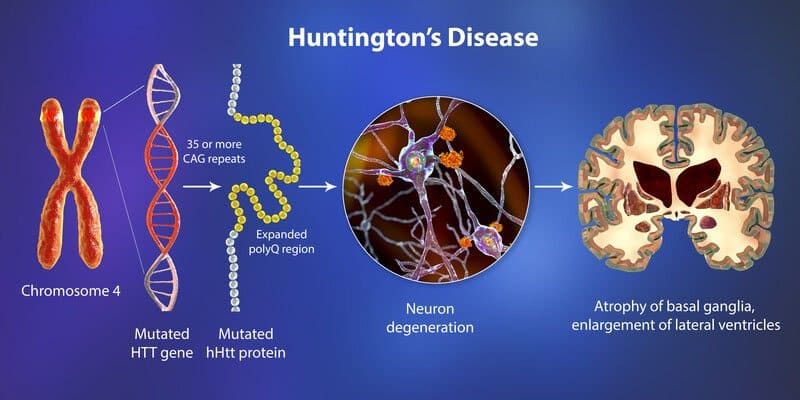
A gene in the HTT gene is mutated and the abnormal protein produced causes brain cells called neurons to become damaged in certain parts of the brain. This gene mutation is inherited as an autosomal dominant trait, which means that someone having only one copy of this gene can develop the disease.
Commonly associated with HD is a mutation with an expansion of CAG repeats in the gene and an expansion of typically ten to 35 repeats in a healthy person and more than 36 repeats in a haploid individual with HD. In successive generations, this genetic instability causes earlier onset, which is called genetic anticipation.
Risk Factors: Who is Affected?
Having a parent with the disease is the main risk factor for Huntington’s disease. If one parent is affected, each child of that parent has a 50 percent chance of inheriting the mutated gene. HD occurs in all races, but it is most common in people of European ancestry. Symptoms occur between the ages of 30 and 50, but the juvenile form can appear earlier.
Complications: The Broader Impact
As Huntington’s disease progresses, it can lead to severe complications that significantly impact health:
1. Infections: People who cannot get out of bed, such as immobile and swallowing impaired patients, are at a high risk of getting pneumonia and other types of infections.
2. Accidents: With increased likelihood of falls and related injuries, coordination problems also increase.
3. Mental Health Crises: Depression and cognitive decline related to HD put people at markedly increased risk of suicide.
Diagnosis: Identifying Huntington’s Disease
Diagnosing Huntington’s disease involves a combination of neurological examinations and genetic testing:
1. Family History: The first clue for healthcare providers is often a detailed family history.
2. Genetic Testing: Confirmation of CAG repeats associated with HD can be done with blood tests.
3. Imaging Studies: Brain atrophy typical of the disease may be seen on MRI or CT scans later in the disease course.
Treatment & Prevention: Managing Symptoms
It is really sad to say that, currently, there is no cure for Huntington’s disease; however, treatments focus on alleviating symptoms:
1. Medications: Chorea is controlled by drugs like tetrabenazine, and antidepressants may treat mood disorders. There are antipsychotic medications that can have a good effect when emotional disturbances get out of hand.
2. Therapies: Both physical therapy and occupational therapy can improve mobility and coordination as well as help make living within the environment more manageable in order to keep someone as independent as they can be for as long as possible.